The brand problem
One venue. Four different reasons to care.
The Music Mill needed to be energetic enough for live entertainment, polished enough for dining, flexible enough for private-event sales, and recognizable enough to hold all of those experiences together.
That made the identity more than a logo exercise.
The visual system had to create continuity even when the subject changed completely.
- concert promotion without becoming a concert-only brand
- restaurant materials that still belonged to the venue
- private-event collateral with enough polish to sell the space
- digital and print applications that could stay visually connected
A brand system earns its keep when the conversation changes and you still know who is speaking.
Build the language first
The identity needed enough personality to survive repetition.
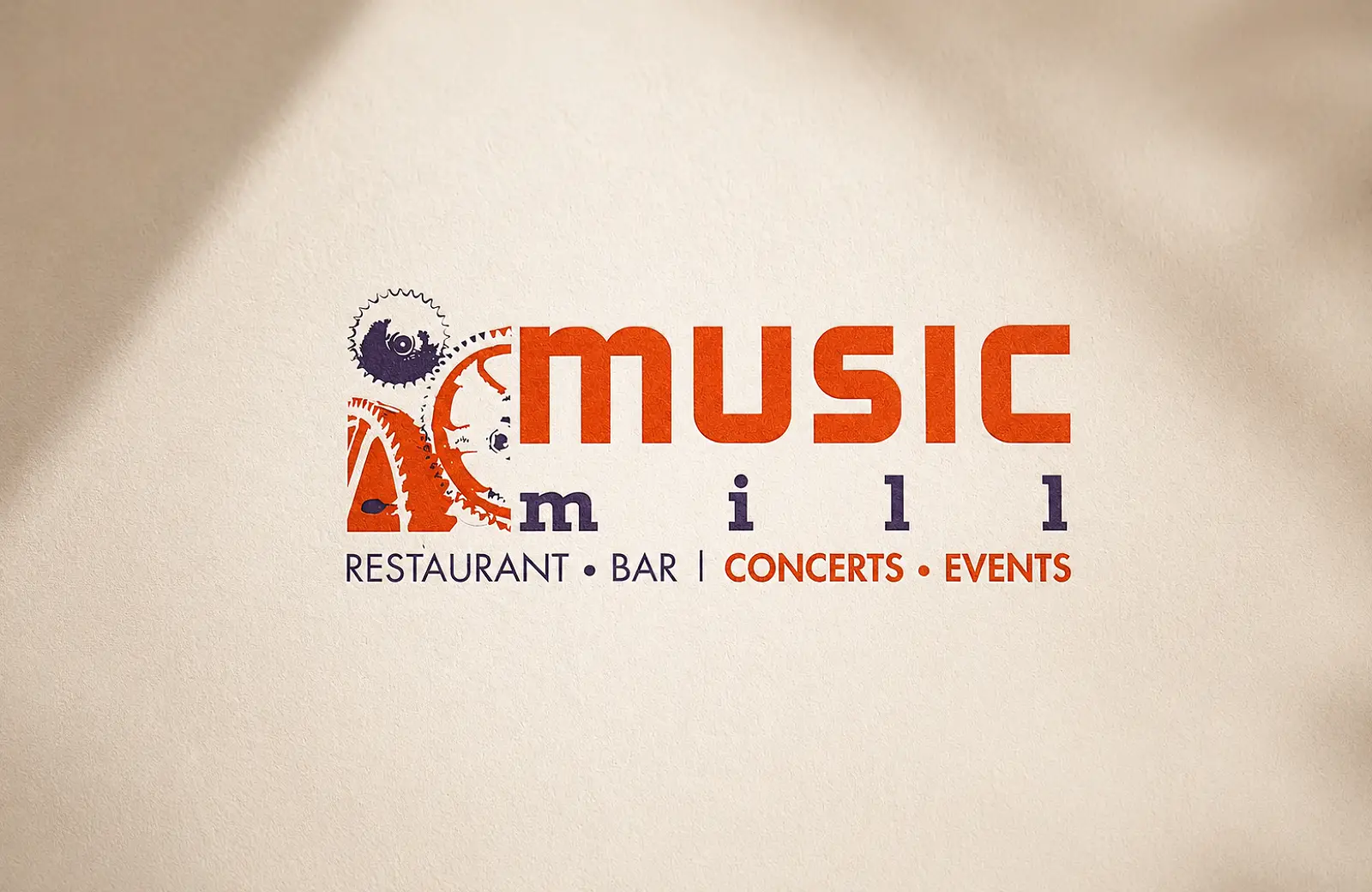
I developed the overall visual identity and brand standards that established the look and feel for the venue.
The system used a consistent graphic language across very different pieces, giving the brand enough structure to be recognizable without requiring every application to look identical.
Menus could be functional. Event materials could be more promotional. Venue pieces could lean into photography and atmosphere.
The visual DNA stayed put even when the assignment moved.
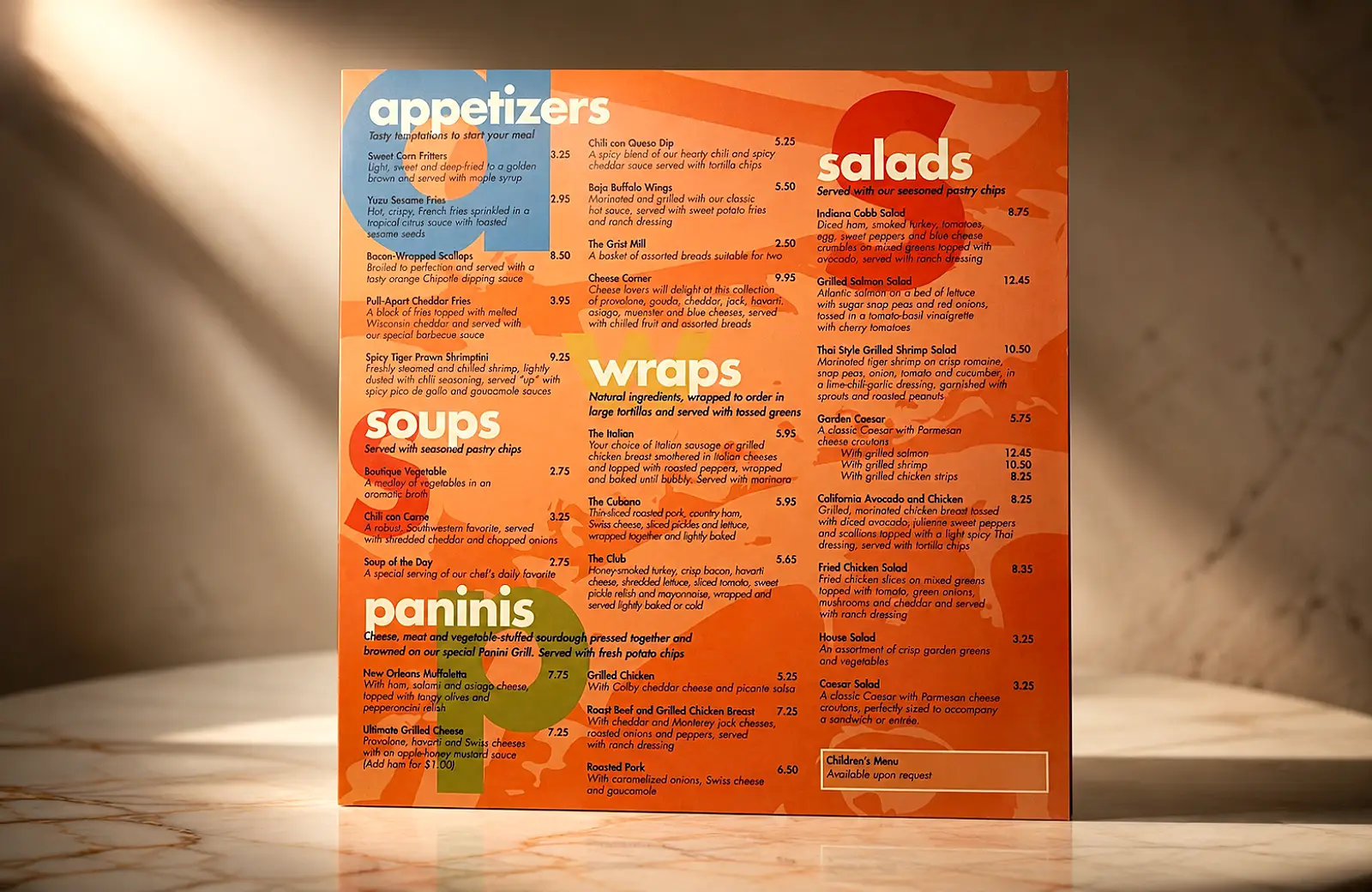
Dinner had to belong there too
Live music gets the spotlight. The menu still has to work.
A venue can have all the personality in the world and still hand someone a menu that feels like it came from somewhere else.
I carried the identity into dining materials and other guest-facing collateral so the restaurant experience felt like another expression of the same brand rather than a separate operation hiding inside the building.
The goal was not to force entertainment graphics onto every page.
It was to make the brand flexible enough that it didn’t have to.
Then sell the room
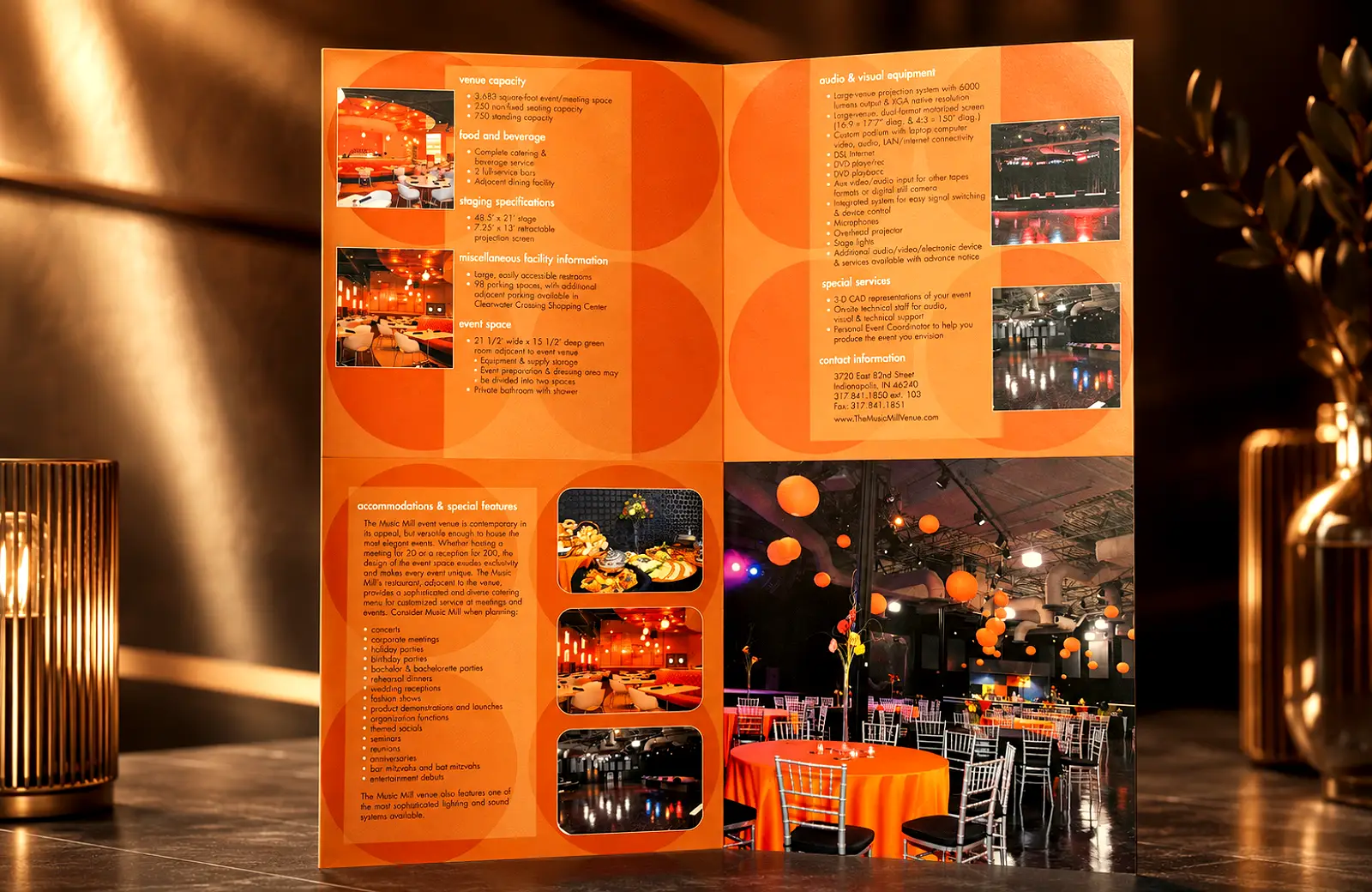
The same space had to look good in somebody else’s plans.
The Music Mill was also marketed for weddings, reunions, corporate gatherings, and other private events.
That required collateral with a different job from a concert promotion or a dinner menu: helping someone imagine their own event inside the venue.
I developed supporting materials for event sales and venue promotion while keeping the larger visual identity intact.
Different audience. Different question. Same place answering it.
And of course it needed a website
The brand had to keep working after the brochure went back in the rack.
I also oversaw the development and maintenance of The Music Mill website, which served as a central hub for event information and reservations.
That gave the identity another environment to live in and another reason the visual system needed to be broader than any single printed application.
The medium changed. The personality could not.
A launch brand is only useful if it survives the launch materials.
What the work became
A brand built to change the subject without changing its identity.
The Music Mill’s marketing system eventually stretched across the different roles the venue needed to play in the market.
I led the general visual aesthetic and identity development, while another team member took the lead on creative direction for print advertising. Together, the work was coordinated so the venue presented a consistent face across channels and applications.
- overall visual identity and brand standards
- menus and guest-facing restaurant collateral
- concert and venue-support materials
- private-event and booking collateral
- local print advertising developed collaboratively
- website development oversight and ongoing maintenance
- a unified visual system across print and digital touchpoints
Dinner tonight. Concert tomorrow. Wedding inquiry Friday. Still The Music Mill.
What this says about how I work
I like brands that know who they are without saying the same thing every time.
Consistency is not a demand that every piece use the same headline, composition, or mood.
It is the harder job of creating enough shared visual character that the system remains recognizable while individual communications respond to different audiences and different needs.
That is especially important when the business itself refuses to fit neatly into one category.
A good identity does not make every conversation identical. It makes every conversation sound like it came from the same place.